




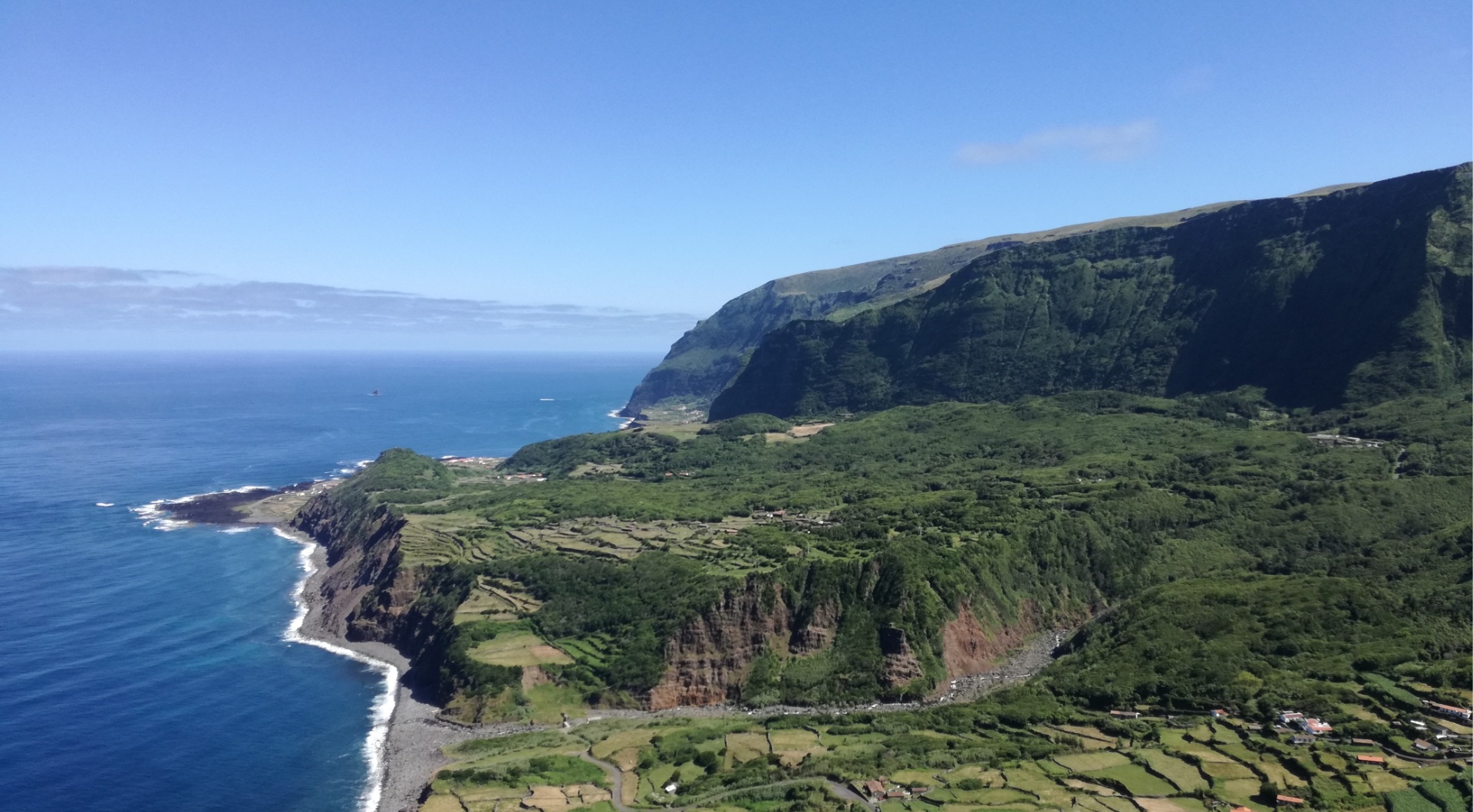
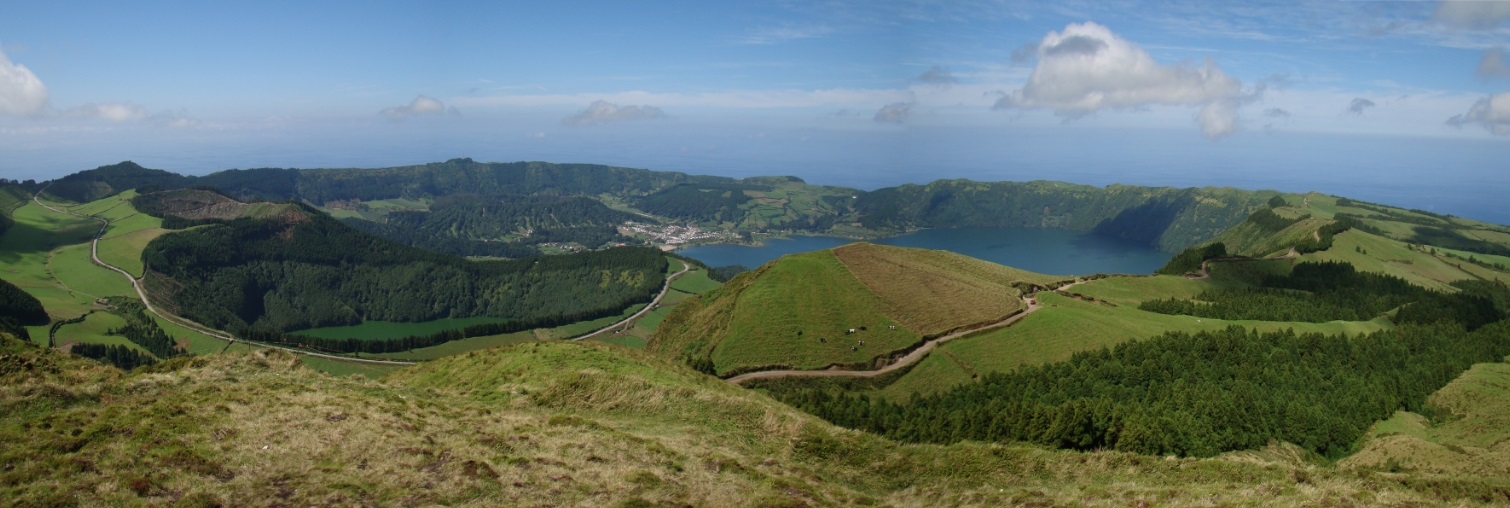
The Azores archipelago emerges from the Azores Plateau (or Platform), an extensive area of irregular bathymetry, defined by the 2000-meter bathymetric curve, which gives way to the surrounding abyssal seabed. In terms of global geodynamics, the archipelago is located at the triple junction of the Eurasian, North American and African (or Nubian) lithospheric plates, whose complexity is at the basis of heated debate and scientific controversy about tectonic models, nature and location of boundaries and dynamics of the triple junction of the Azores, including the influence that the “hot spot” of the Azores plays in this region of the Atlantic.
In general terms, the main structures that frame the triple junction of the Azores are the Mid-Atlantic Ridge (with approximately NS direction), which corresponds to a stretch boundary between the North American plates, to the West, and the Eurasian and African plates, to East, and the GLORIA Fault (generally oriented E-W), which establishes the boundary of Eurasia-Africa plates and which integrates a broader structure, the Azores-Gibraltar Fault. In the area of the Azores Plateau, the boundary of the Eurasia-Africa plates is defined by the “Azores Block”, a sector of approximately WNW-ESE direction, which comprises the islands of the Central Group and the island of São Miguel. The configuration of the islands of the Central and Eastern Groups, with a general orientation WNW-ESE, and of the islands of Corvo and Flores, roughly NS, reflects a clear structural control of them, by the main tectonic accidents that interact in the triple junction of the Azores and strongly condition the geomorphology of the islands of the archipelago.
From a geological point of view, the islands of the Azores are all of volcanic origin and correspond to oceanic islands that emerged from the surrounding seabed by the progressive stacking of undersea volcanic material, a process that began about 36 million years ago (M.y.a.). The oldest sub-air volcanism dates back to the Upper Miocene (e.g. 8.12 M.y.a.), on the island of Santa Maria, while Pico is the youngest island in the archipelago, formed around 0.3 M.y.a.. Although the islands furthest from the Mid-Atlantic Ridge are generally older, there is no clear Westward migration of volcanic activity, whether on a regional or insular scale. Better knowledge about the mantle plume under the Azores Plateau (namely its size and location, whether it is fixed or mobile) will certainly help to clarify the geodynamic framework of the Azores and the characteristics of its volcanism.
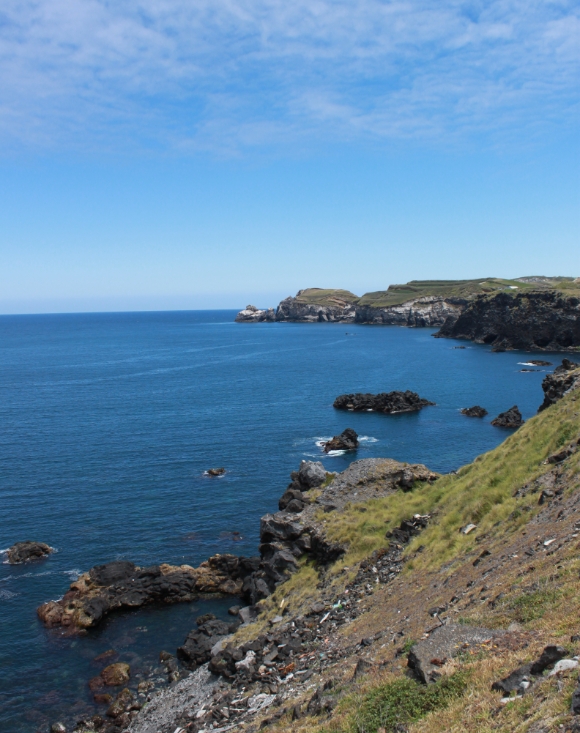
In the Azores archipelago there are 27 main volcanic systems, of which 16 correspond to polygenetic volcanoes (mostly siliceous volcanoes with a subsidence caldera at the top) and 11 are zones of fissural basaltic volcanism, often in the form of volcanic mountain ranges, more or less extensive. Of these systems, 9 polygenetic volcanoes and 7 areas of basaltic fissure volcanism are considered active (although in a dormant stage), located on the islands of São Miguel, Terceira, Graciosa, S. Jorge, Pico, Faial and at the seamount D. João de Castro. Along the islands there are also several active underwater volcanic mountain ranges, such as the seamount of Monaco (south of São Miguel), the seamount Princesa Alice (southwest of Faial) or the underwater mountain range east of Pico Island.
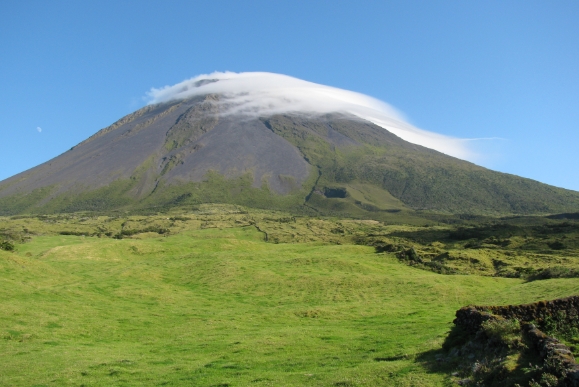
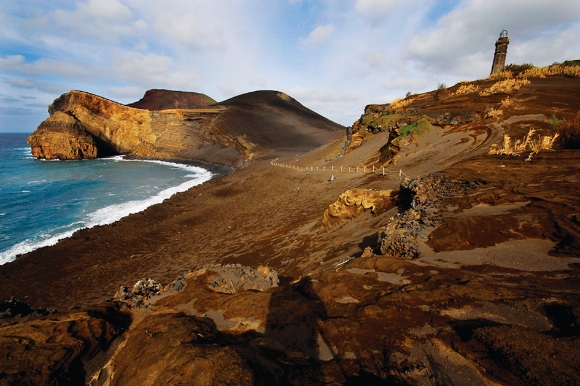
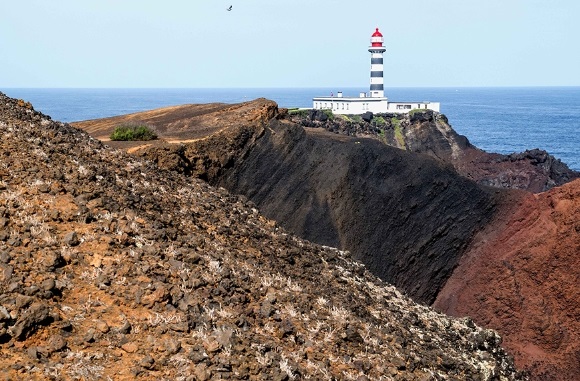
There are more than 1750 monogenetic volcanoes spread across the 9 islands of the Azores, either in the polygenetic volcanoes (flanks and interior of the caldera) or in the areas of fissural basaltic volcanism. These monogenetic eruptive centres include spatter and scoria cones, trachytic domes and coulées, tuff rings and cones, blast craters (maars) and eruptive fissures, often defining local or regional volcano-tectonic alignments. The last most important eruptive events were of a submarine and basaltic nature s.l., and occurred in Capelinhos, on Faial island, in 1957/58 and in about 8.5 km to the NW of Ponta da Serreta, off Terceira island, in 1998/2000.
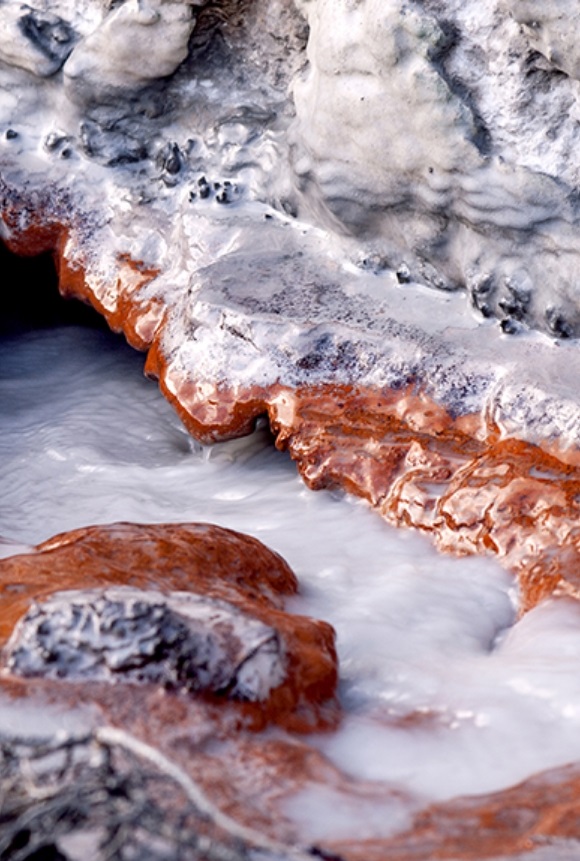
In addition to the aforementioned volcanic episodes, secondary volcanic manifestations are permanently observed on the islands of São Miguel, Terceira, Graciosa, Faial, Pico and Flores, expressed either as thermal springs or as fumaroles and diffuse gaseous emanations in the soil. In addition to these occurrences, there is also the important fumarolic field located in the Seamount D. João de Castro, a polygenetic undersea volcano that came into activity in 1720 A.D., and the deep underwater hydrothermal fields Menez Gwen, Lucky Strike, Saldanha and Rainbow.
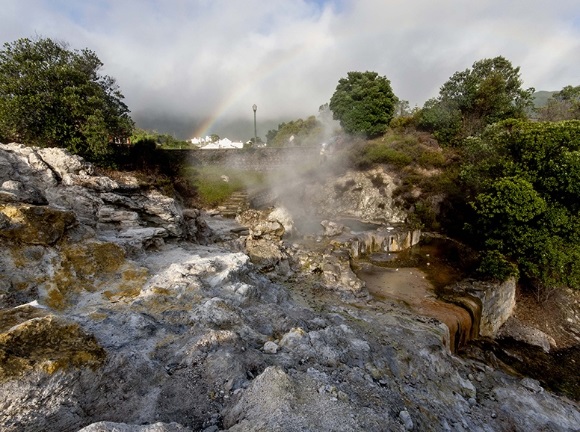
The works of inventory and characterization of geosites present in the territory were based on the accumulated knowledge of the geological characteristics of the territory, the eruptive history of each of the Azores islands and the geological heritage elements recognized in the islands and surrounding ocean. Several researchers from the Region and national and foreign scientists with work in the Azores in various fields also contributed to this inventory, which resulted in a sustained and comprehensive approach, although susceptible to improvement.
Thus, the geopark is based on a network of 121 geosites spread over the nine islands and the surrounding marine area, which ensure the representativeness of the geodiversity of the Azores archipelago and reflect its geological and eruptive history of about 10 million years.
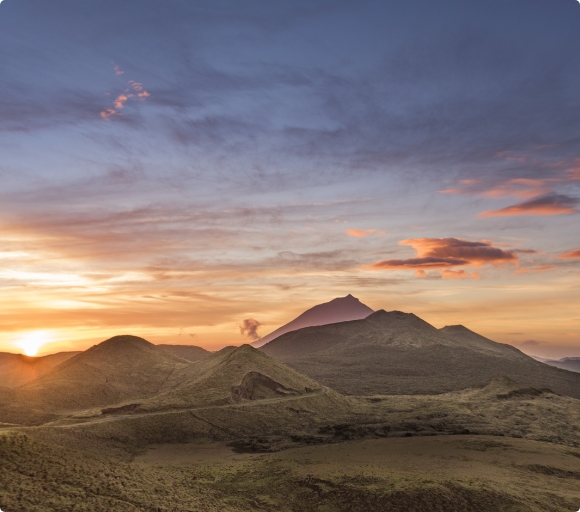
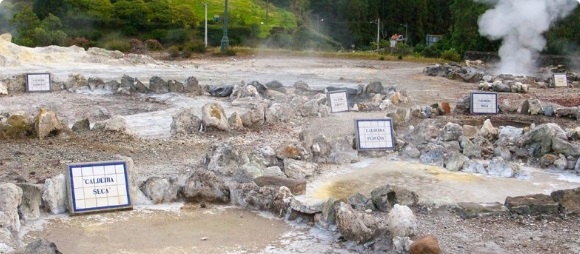
Since the discovery and settlement of the Azores, in the mid-fifteenth century, 26 volcanic eruptions have been reported in the Azores region, 12 of which in terrestrial environment (on the islands of São Miguel, Terceira, São Jorge, Pico and Faial) and 14 submarines.
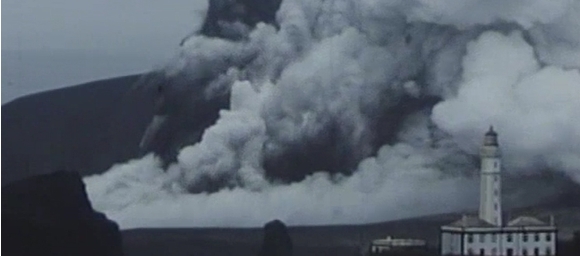
The last most important eruptive events were of a submarine and basaltic nature s.l., and occurred in Capelinhos, on Faial island, in 1957/58 and in about 8.5 km to the NW of Ponta da Serreta, off Terceira island, in 1998/2000.
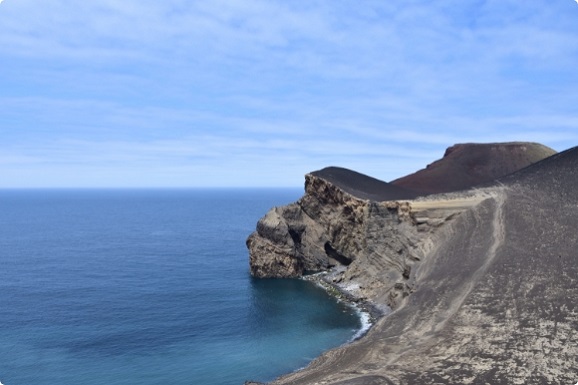
The island of Santa Maria stands out from the other islands of the archipelago for its sedimentary formations and fossiliferous deposits, however, fossils have also been discovered on other islands, such as the priolo-maior-dos-Açores (Azores major bullfinch) on Graciosa island or the vegetation patterns in Monte Brasil (Island Terceira).
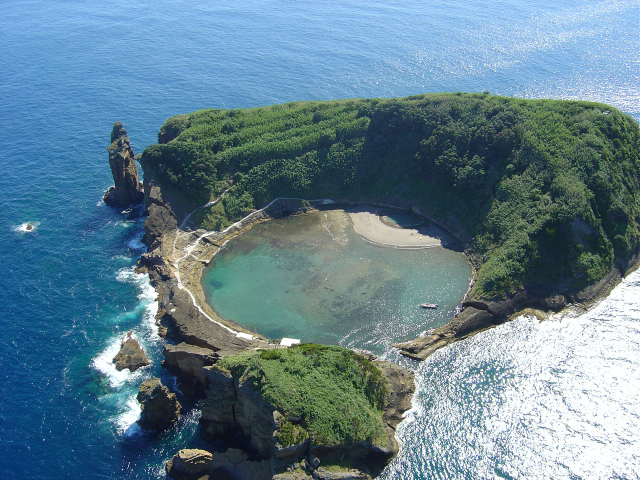
In the Azores there are 27 volcanic systems identified, including 16 large volcanoes and 11 zones of fissure volcanism. These large complexes are associated with more than 1750 small volcanic cones such as scoria cones, spatter cones, lava domes, maars, among others.
The Azores are an archipelago belonging to the Macaronesia biogeographic region, one of the richest in biodiversity in Europe.
It is one of the most isolated archipelagos in the world and supports a significant number of endemic species unique to each island.
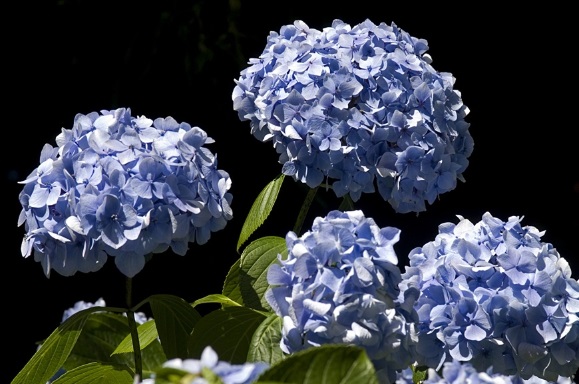
The climatic, geographic and geological conditions of the Azores have given rise to a wide variety of biotopes, ecosystems and landscapes that provide a large number of habitats and an interesting diversity of species, some of them endemic.
All these species live in characteristic habitats, some of them very rare, which are distributed from the coast to the mountains, such as volcanoes, caves, forests, scrub, meadows, pastures, peatlands, lakes and streams
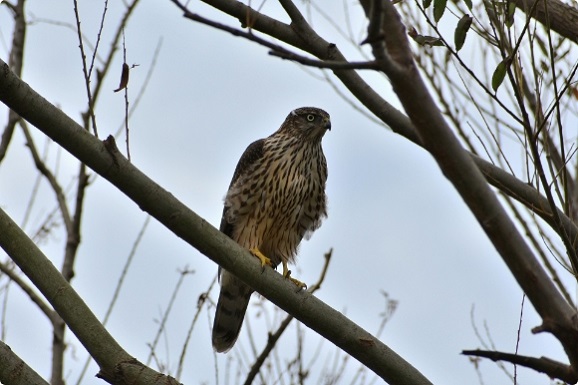
Among the Azorean avifauna, stand out the common Buzzard (the only bird of prey present in the archipelago), the Wood and Rock Pigeons, the Priolo (endemic terrestrial bird whose habitat is limited to the Laurissilva Forest of northeastern São Miguel), the Canary and several seabirds such as the Cory’s Shearwater (whose most of the world population nests in the archipelago), the Pink Tern (whose most of the European population nests in the Azores), the Monteiro’s Storm Petrel (endemic seabird present in the islets of Praia and Baixo, on the island of Graciosa) and seagulls.
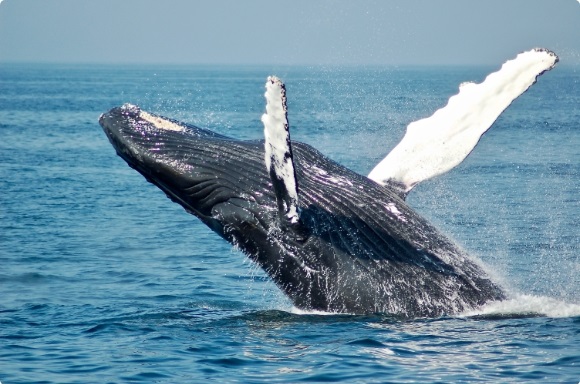
The Azorean sea is home to several species of cetaceans, the most common being sperm whales, beaked whales and dolphins. Some shark species are recorded, ranging from the small dwarf shark to the whale shark.
One can also find swordfish, tuna, longfin tuna, eel, moray eel and mackerel. In coastal areas, there are often octopuses, sea urchins, starfishes, limpets and barnacles. In streams and lakes it is normal to find some species of trout, perch, carp and pike.
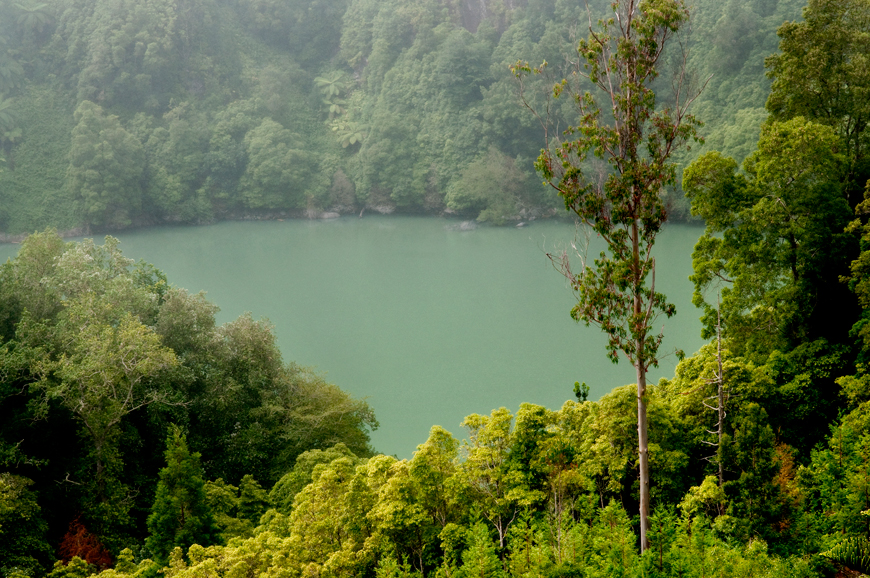
The Laurissilva Forest is a type of rainforest that only exists in the Macaronesia region, a region formed by the archipelagos of the Azores, Madeira, Canary Islands and Cape Verde.
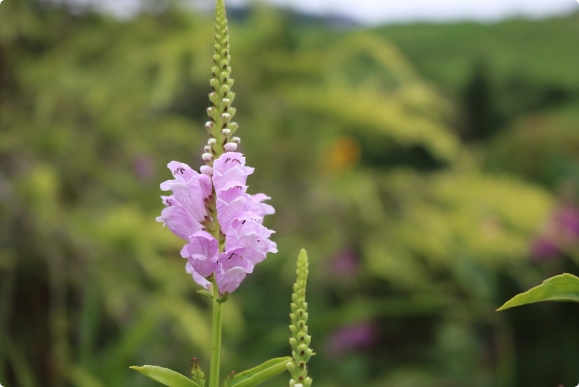
The list of known species and subspecies in the Azores exceeds 8000, and more species, especially marine ones, may become known in the near future. Marine organisms make up about 23% of the Azores' biodiversity.

Arthropods are the terrestrial group with the greatest biodiversity in the Azores, accounting for about 37% of the total taxa (species and subspecies), a pattern that is common throughout the world. The second and third most diverse groups are, respectively, vascular plants and lichens.
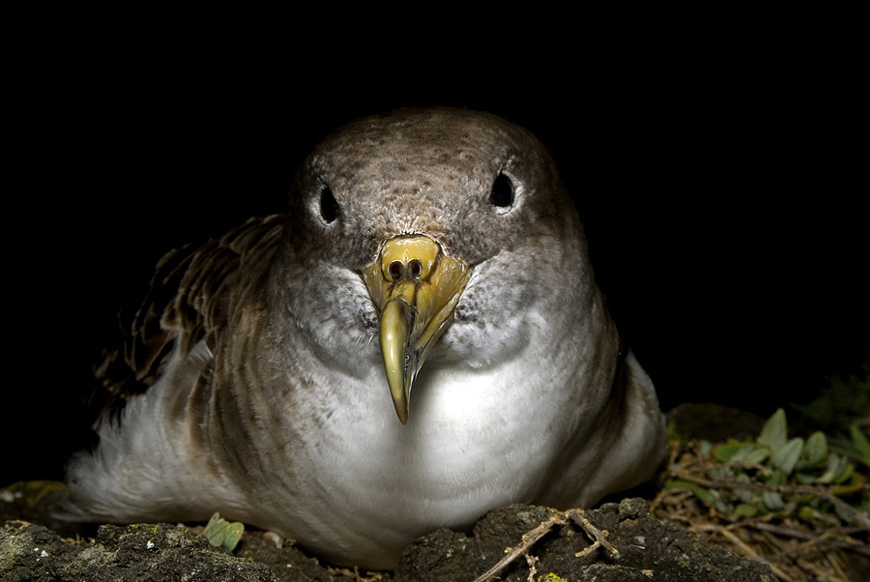
Endemic species is one that occurs exclusively in a certain geographic area. In the Azores there are about 71 species and subspecies of terrestrial vertebrates, 14 of which are endemic to this archipelago. Noteworthy is the species Nyctalus azoreum, the Azorean Bat, the only endemic mammal of this archipelago.