




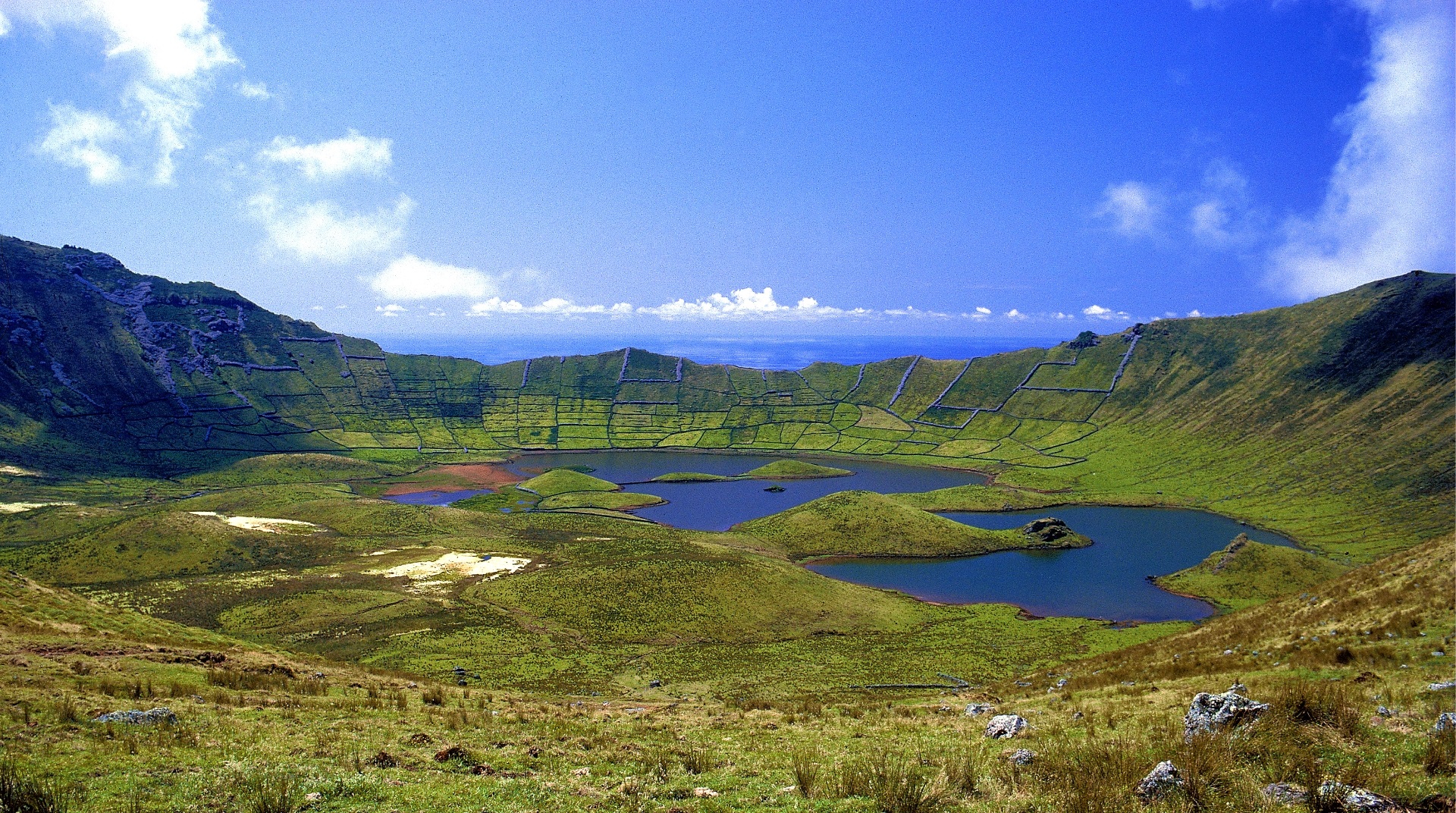
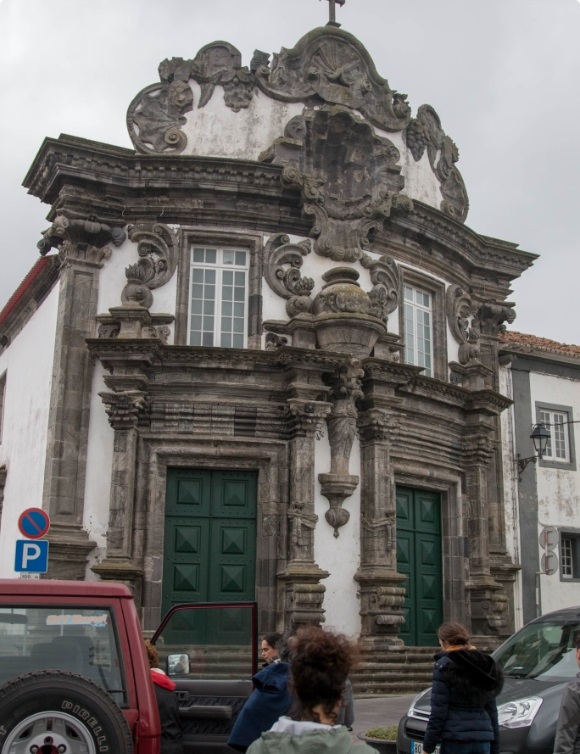
The archipelago has a varied building heritage, as a result of the specific geographic and geological features of each island and of the kind of soil occupation and activity carried out by man over time. The built heritage, frequently decorated with a stonework of volcanic rocks (especially basalts and ignimbrites), includes old manor-houses, monasteries and churches and the building of several fortresses.
In addition to these, there are some ruins of ancient buildings that perpetuate natural geological phenomena, such as eruptions and earthquakes.
The Azores have two areas of cultural interest classified as UNESCO World Heritage.
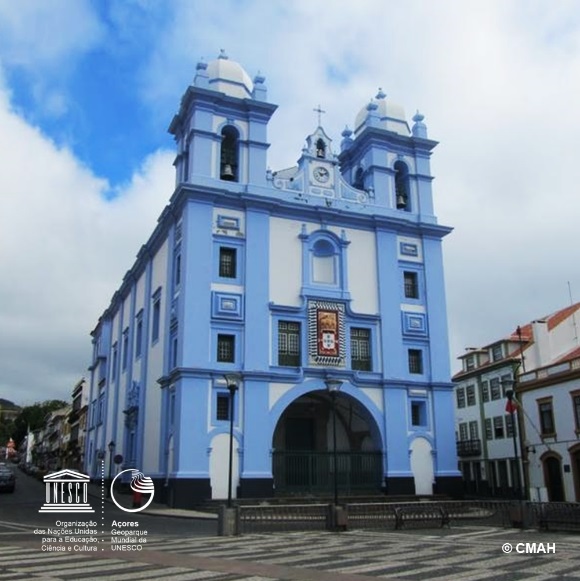
The first one is the Historical Centre of Angra do Heroísmo (Terceira island), due to its military architecture and for having constituted an obligatory harbor of call during the maritime discoveries, between the 15th and 19th Centuries.
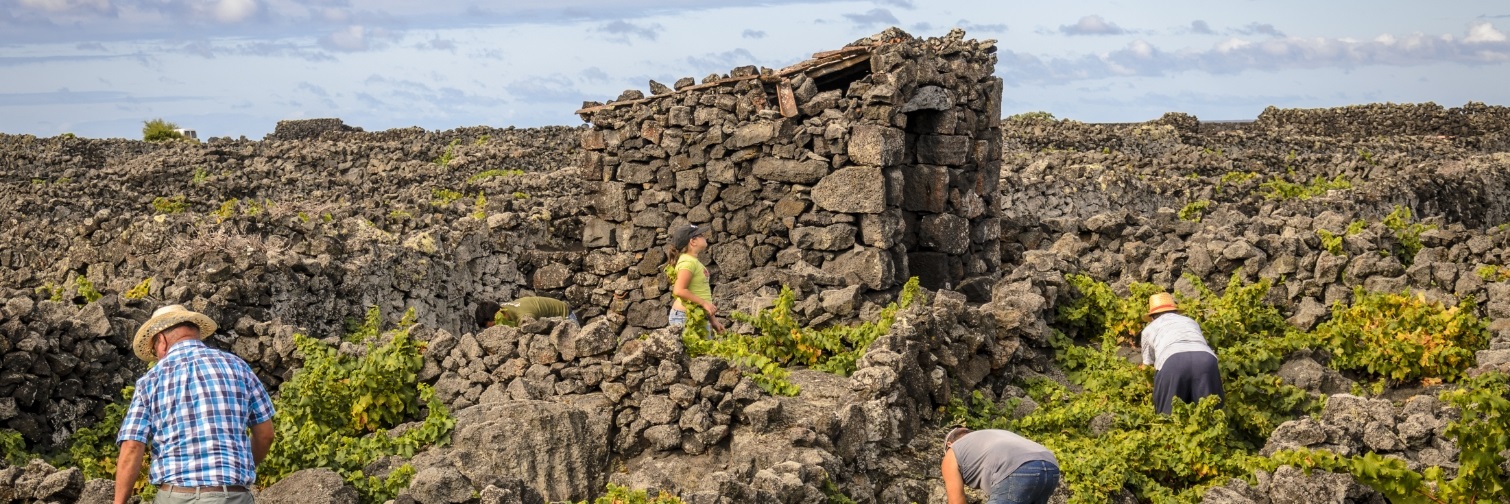
And the second one is the Landscape of the Pico Island Vineyard Culture, because of the transformation of its rocky, and apparently unproductive, landscape through viniculture, producing a wine of great quality.
Recognizing the importance of the Underwater Archaeological Heritage, the bay of “Angra do Heroísmo” is classified as an Underwater Archaeological Park. This initiative aims to promote, award and sharing of this heritage with the local community, its visitors and specialists in nautical and underwater archaeology.
In the archipelago there is a significant number of Philharmonic bands, Folklore groups, Theatre groups, Choirs and “Tunas” (popular or university music groups).
The archipelago has several museums and Regional Public Libraries in all islands:
On a legendary level, some people associate the Azores islands with the extint Atlantis, the mythical insular kingdom quoted by Plato. At a historical level there are references, in books and cartographic maps since the mid of the14th century, to nine islands that are in approximate positions of the Azorean islands in the Atlantic Ocean. However, it was with the Epic Portuguese Maritime Discoveries, led by Infante D. Henrique, that the Azores were definitely registered in the map of Europe. It is still unknown if it was Diogo Silves, in 1427, or Gonçalo Velho Cabral, in 1431, the first navigator to reach the archipelago. Also, the origin of the name Azores has several theories, the most common one associates the designation of the common bird found on the islands, which was mistaken as being another bird of prey: the northern goshawk (açor). But one thing is sure, it was the Infante D. Henrique who incited the settlement of the islands, first with the launch of animals between 1431 and 1432, then by sending settlers in 1439.
Since then, the settlement extends over the 15th (eastern and central groups) and 16th ( western group) centuries. Jews, Moors, Flemish, Genovese, British, French and African slaves joined to the people of Portugal mainland to face the hardships of such a task.
This epic start moulded a people who, throughout the centuries, resisted to volcanic eruptions and earthquakes, isolation, invasions of privateers, political wars, infesting diseases. The resistance to the Spanish domain during the dynastic succession crisis of 1580 and the support for the liberal movement during the civil war (1828-1834) reveal the courage of the azorean people. In the 20th century, this bravery survives in whale hunting, when men threw themselves into small wooden boats to confront the immense blue sea with gigantic sperm whales.
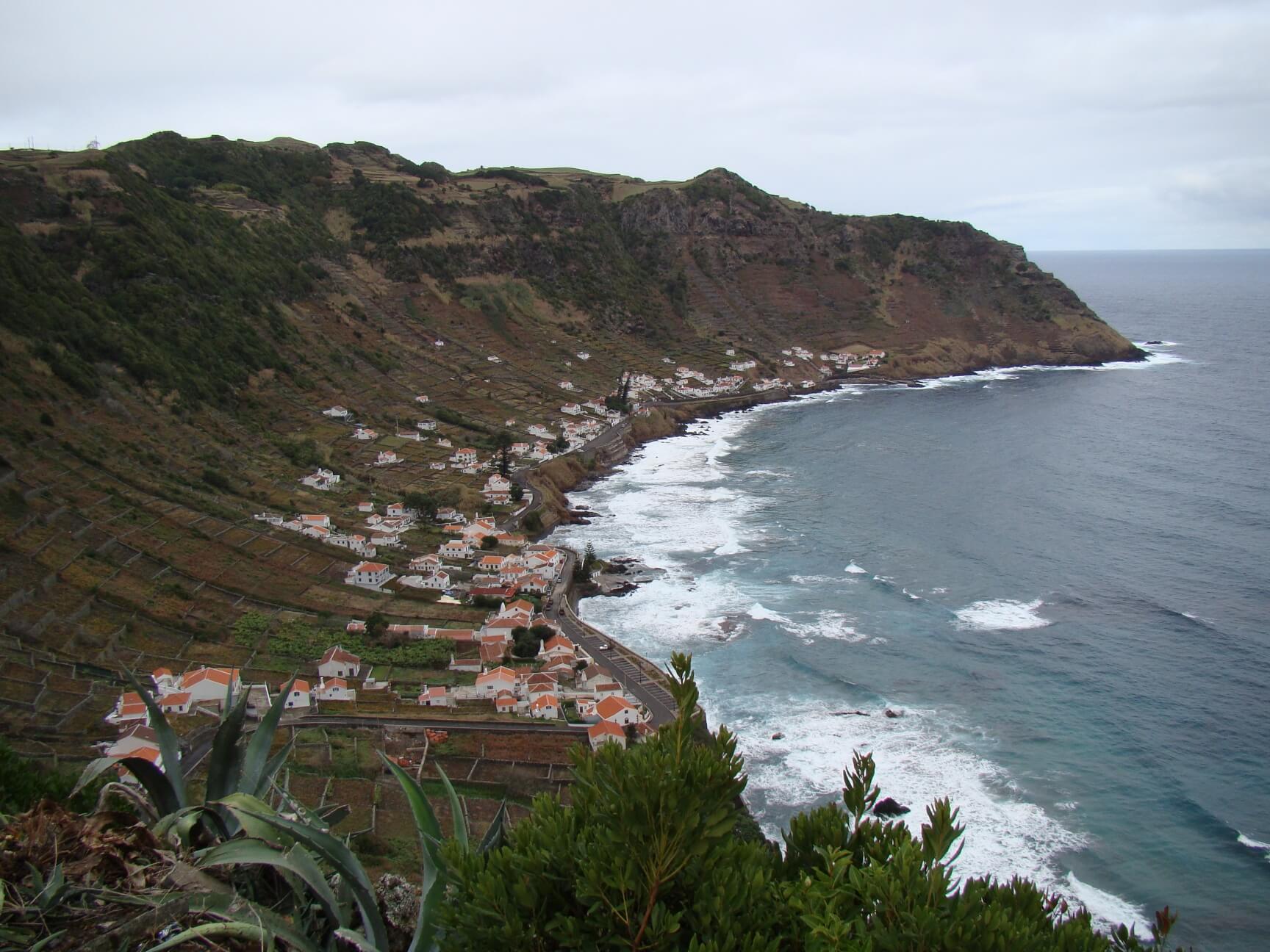
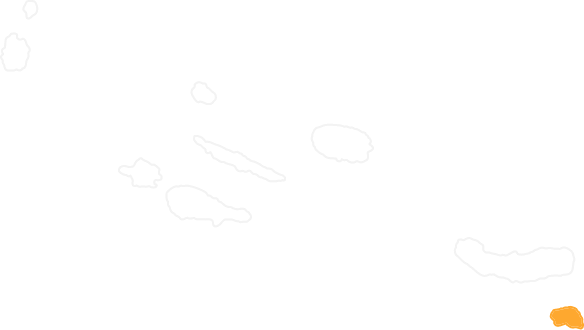
Some attribute to Diogo de Teive the first portuguese contact with the island, probably in 1427. Others defend the name of Gonçalo Velho Cabral, navigator and friar of the Order of Christ, as the first to see this island, in 1431. What is almost certain is that Santa Maria island was the first point of contact with the Azores Archipelago, constituting the first insular settlement effort, in approximately 1439, when the Donatory Captain Gonçalo Velho and a group of settlers moored their boats at Praia dos Lobos. The arrival of new families from Portugal mainland, mainly from the Algarve and Alentejo, contributed for its development, in this way the locality of Porto was the first to receive a town charter. The local economy was based on the woad, a dye plant which is extracted a blue dye used to color textiles in the distant Flanders, on the production of wheat, a staple food at the time, and on the extraction of clay, used for the production of pottery and roof tiles.
In 1493, the ships of Christopher Columbus arrived in Santa Maria island, on the return trip of their first voyage to discover America. The landings of other foreing ships were more fierce during the 16th and 17th centuries, when sucessive pillages occurred on the island by privateers from England, France, Turkey and Arabs from North Africa. In 1616, the inhabitants lived under Moorish occupation for almost a week. According to the legend, part of the population took refuge in the Santana Cave to escape the pillage, arson, tortures and kidnappings. Also in 1675, Moorish pirates returned in force to the Bay of Anjos and, when they left they took prisoners to be sold as slaves.
After the peak of exports for the textile industry, the 18th and 19th centuries were marked by the spread of the culture of vineyards, wheat, corn, fruit orchards, potatoes and taro root, along with cattle breeding and dairies. Despite the calm times, the subsistence economy of the island invited portions of the population to emigration. The 20th century brought another dynamic and progress due to the construction of the airport. The construction began in 1944, with the force of thousands of American and Azorean labouring hands, the infrastructure was considered strategic in anti-submarine warfare in the Second World War by the United States. After the war, the airport became a civil airport and becomes scale aircraft crossing the Atlantic. In the late 1960s, the new jet planes, with more autonomous flight, stoped landing at Santa Maria island. However, remains intact the central role as a major air traffic control center over the Atlantic Ocean. Nowadays, the service sector is the basis of the economy, followed by agricultural, cattle breeding and fishing activities.
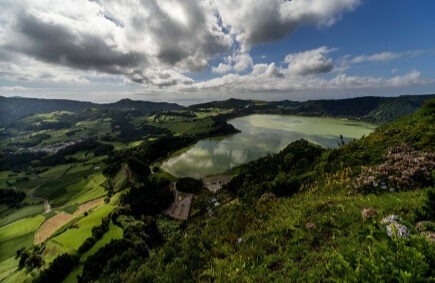
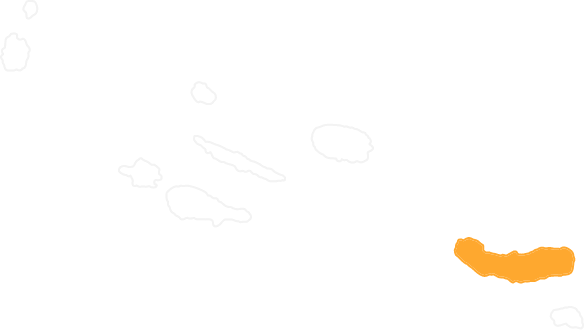
Sometime between 1427 and 1431 the Portuguese navigators discovered São Miguel island, rigth after Santa Maria island. The initial settlement, dating from the decade of 1440, led by Gonçalo Velho Cabral, was made by settlers from the northern Portuguese regions, Estremadura, Algarve and Alentejo. Later arrive other communities made up of Moors, Jews and some foreigners, including French and English. The fertile soils and the existence of some safe bays quickly transformed the island into a trading post. The economic growth was sustained, essentialy, by the production and export of wheat and woad, which boosted the settlement of the island.
The capital of the island was Vila Franca do Campo until the earthquake on October 1522, which left a track of destruction throughout the city. Then Ponta Delgada assumed a important role, being city and capital in 1546. The end of the 16th century was marked by the attacks of privateers and São Miguel was occupied by the Spanish army in 1582, in the context of the Azorean resistance to the military forces of the new king of Portugal, Filipe II of Spain. After the Restoration of the Portuguese throne in 1640, the commercial development was gained a new life, narrowing the connection to Brazil.
The export of oranges, mainly to Great Britain, became the main source of wealth throughout the 18th century and mid 19th century. Date from this period most of the churches with rich woodcarvings, and manor houses with refined stoneworks that, in our days, delight visitors. The decimation of oranges by infectious diseases, from 1870 onwards, reduced drastically the production and led to a populational emigration outbreak to Brazil and the United States.
The introduction of new cultures - pineapple, tea, tobacco, hemp - improved the economic development of the 19th century.The economy of São Miguel remained vibrant during the 20th century, mainly due to the development of agriculture, which supplied part of the dairy industry. However, since the 1980's, the progress of the tertiary sector has been increasingly noticeable, employing currently most of the São Miguel population. In this aspect, tourism is one of the most recent investiments made at São Miguel, the island where is located the seat of the Regional Government of the Azores.
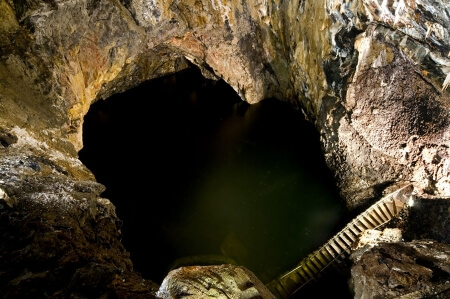
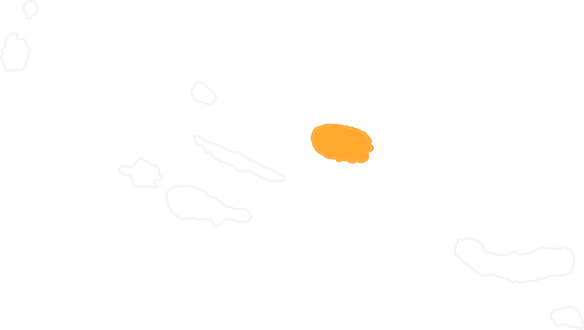
It was the third stop of the archipelago to be recognized by Portuguese navigators, probably late 1420's and early 1430's, began to be called Island of Jesus Christ. The subsequent re-baptism to Terceira island take into account the order of the previous findings, Santa Maria and São Miguel islands. The settlement is later here (Central Group) than in the Eastern Group because only in 1449 Infante D. Henrique ordered Jácome de Bruges, a Flemish, to settle the island. Despite this first investment, the effective settlement of the island was only carried out from 1470 onwards, having as central areas Praia and Angra, which determinated the emergence of localities for the rest of the territory.
During the 15th and 16th centuries, the importance of the Angra bay was notorious not only as a internal trading post, promoting the regional circuit of products produced in other Azorean islands, but also as a inter-continental stop over for the ships sailing between Europe and the distant Ameria and India. The city of Angra, founded in 1534, became the political fulcrum, economic and religious of the Azores and it was filled with precious metals and exotic spices that made the island a privileged and continuous target for the English, French, Castilian and Flemish privateers.
In 1580, at the time when the Spanish King Filipe II took over the Portuguese throne, the inhabitants of Terceira supported the claims of D. António, Prior do Crato, the Portuguese candidate. Spain tried to contain the rebelion, but the first landing of Castilian troops, in 1581, ended in their heavy defeat at the famous Battle of Salga. Two years later, the Spanish returned in greater numbers and managed to take over the island after many violent fightings. With the Portuguese Restoration of 1640, Portugal recovered its independence and Terceira island solidified its central position in the archipelago.
The brave spirit of the inhabitants was, once again, tested during the Liberal Wars. The majority of the population supported the liberal causes and rebelled against the absolutism, which was already confortably installed in other locations. In 1829, a fierce naval battle ended with the defeat of the troops of the Absolutist King Miguel while they tried to land on the sandy beach of Praia. Thanks to this episode, this town is now known as Praia da Vitória (Victoria Beach). During this turbulent period of the History of Portugal, Terceira island operated as a base for King Pedro IV to organize the repossession of the throne and to consolidate the constitucional monarchy. Angra was named the capital of the Kingdom of Portugal and it also earned the second name of Heroísmo(Heroism). In 1832, the voyage of the Armada to Portugal mainland, where it landed on beach of Mindelo, it was the peak moment of the victory of the liberal Idealism.
During the 1980's, the construction of the island airport and of the Praia harbour opened new prospects for the future, thus placing Graciosa on route to a sustainable tourism.
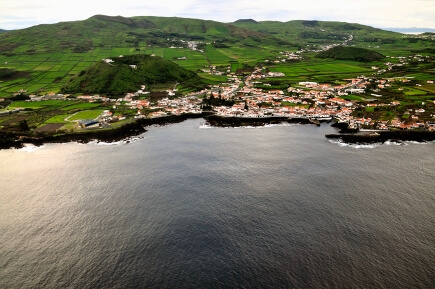
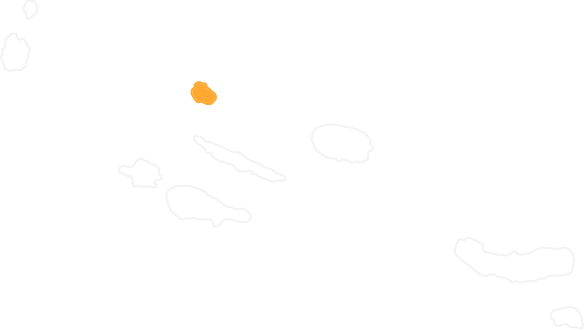
Is still uncertain the year of the Portuguese discovery of Graciosa. It is believed that it was identified in 1427, along with the other islands of the central group, and released on the island some diverse cattle, according to the order of the Portuguese Crown. The official and continued settlement started in approximately 1470, probably from two distinct cores, one led by Vasco Gil Sodré in the area of Santa Cruz, and another led by Duarte Barreto, in the area of Praia. In 1485, Pedro Correia da Cunha was already appointed as captain of the island, having encouraged the arrival of new settlers from Portugal mainland and Flanders. In a movement from the south to the north, the interior plains of fertile soils were consecutively occupied. This demographic consolidation benefited the locality of Santa Cruz which received a town charter in 1486, followed by Praia, also known as São Mateus, which was upgraded to town in 1546. The local economy was based on agriculture. Wheat and barley, the last one almost exceptional within the archipelago, were the productions of the 16th century. Beasides the harvest of orchil, the wine is increasing prominence with local spirits drinks and wine to be appreciated and consumed inside and outside the island. Commercial transactions were focused on Terceira island, which was then the central harbour of the archipelago. For this reason, its neighboring island, Graciosa was also attacked and plundered by pirates during the 16th and 17th centuries.
Periods of drought and natural disasters are salient and constant in the history of Graciosa, causing a general impoverishment. As happened in other islands of the Azores, vineyards suffered a remarkable decline during the 19th century, given the spread of the grapevine pest oidium and phylloxera, diseases of vine that affected most of the production. Between the 1950's and 1970's, a surge of emigration to the United States impoverished the socio-economic panorama of the island. A cooperative union movement with the aim to recover part of the tradition and wine culture culminated, in 1994, with the creation of the Região Demarcada da Graciosa (Demarcated Region of Graciosa). Nowadays, the dairy and meat productions are the most important activities for the economy of the island. The minutely divided fields still harbouring corn, vegetables and fruit trees.
During the 1980's, the construction of the island airport and of the Praia harbour opened new prospects for the future, thus placing Graciosa on route to a sustainable tourism.
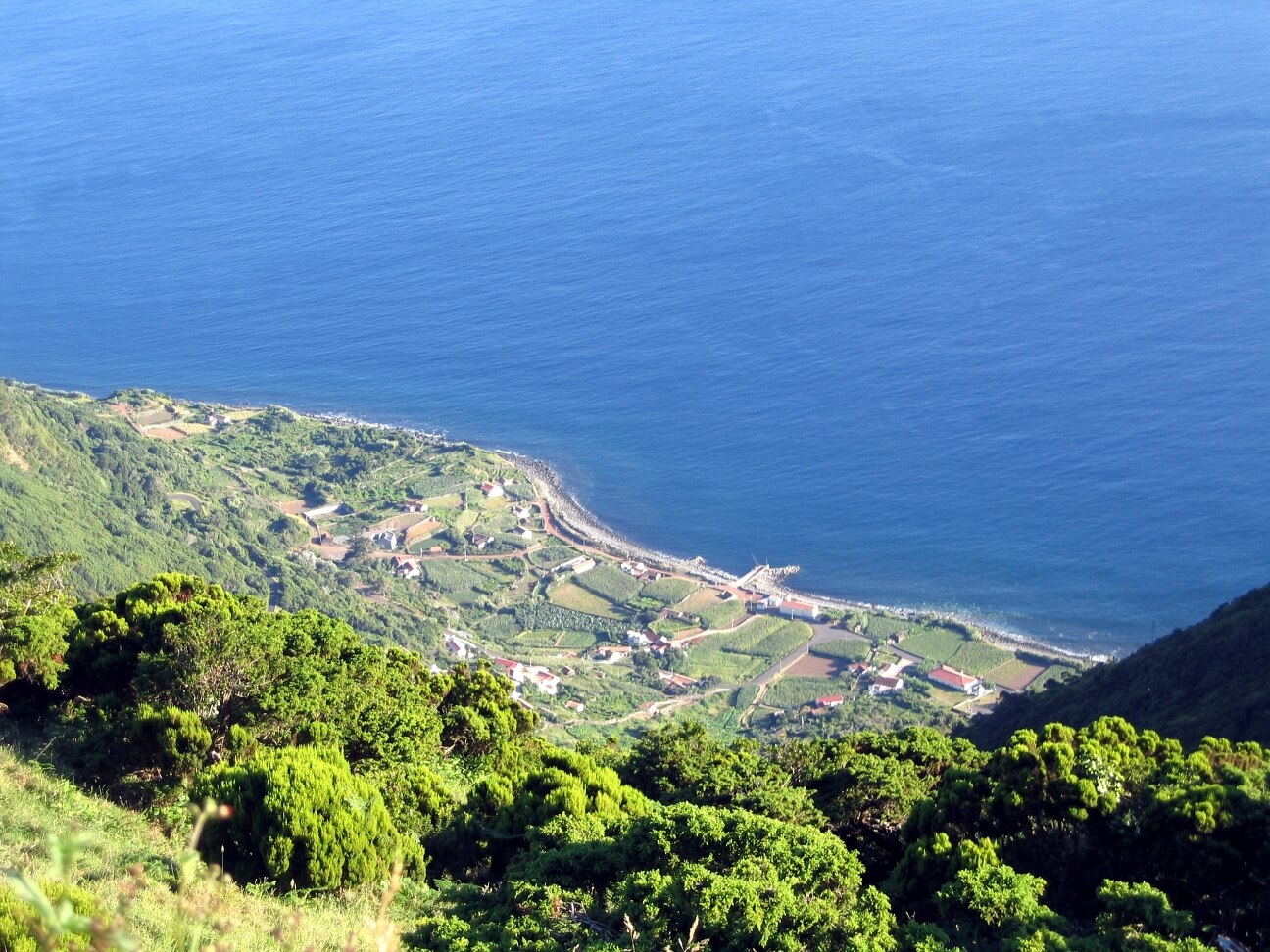
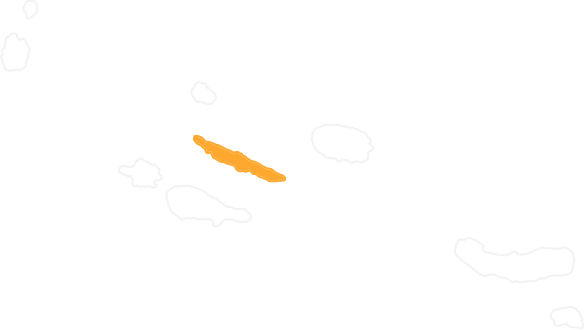
Given its proximity to Terceira, it is believed that the Portuguese navigators discovered São Jorge island along with the other islands that surround it. Everything indicate that the settlement began around 1460, being the second island of the Central Group to be inhabited. A decade later, several settlements were already established on the western and southern coasts, including in Velas. The arrival of the Flemish noble Wilhelm Van der Haegen, in 1480, marks the foundation of the Topo community, in the east extreme of the island.
In 1483, the poor development of captaincy of the island was given to João Vaz Corte Real, who also was captain of Angra, on Terceira island. The town charter was conceded to Velas at the end of 15th century, a title that was yet extended to Topo in 1510 and to Calheta in 1534. The prosperity was based on wheat, but early the island was also noted for the quality of its pastures.
Left to a certain isolation due to lack of safe ports, São Jorge island did not acquire great economic role. In the 16th and 17th centuries, the island received unwanted visits of British and French privateers and the ruthless Turkish and Algerian pirates. In 1708, the incursion of the French Gray-Du-Trouin in Velas became very famous because this privateer was defeated by the people´s heroic resistance, leaving the island with high losses in his crew.
From the 16th century to the 19th centuries, the inhabitants´ life were punished by agricultural crisis, which caused food scarcity, and by earthquakes and volcanic eruptions, which caused great destruction. However, the economy followed the agricultural and cattle breeding model of the other islands: wheat and vines culture, woad harvest and cattle raising that early generated important secondary sectors linked to cheese and wool. The fishing activity took place at the end of the 19th and 20th centuries, first by whaling and after, 1960's, by the tuna fishing. Currently, the excelence of the pastures of São Jorge is reflected in the production of a typical cheese made with raw cow´s milk, with the Designation of Protected Origin (Denominação de Origem Protegida), making this island a demarcated region for the production of São Jorge cheese. Nowadays, the airport of the island and the modern harbours of Velas and Calheta contribute to the full integration of São Jorge island in the Azores Archipelago and in the world.
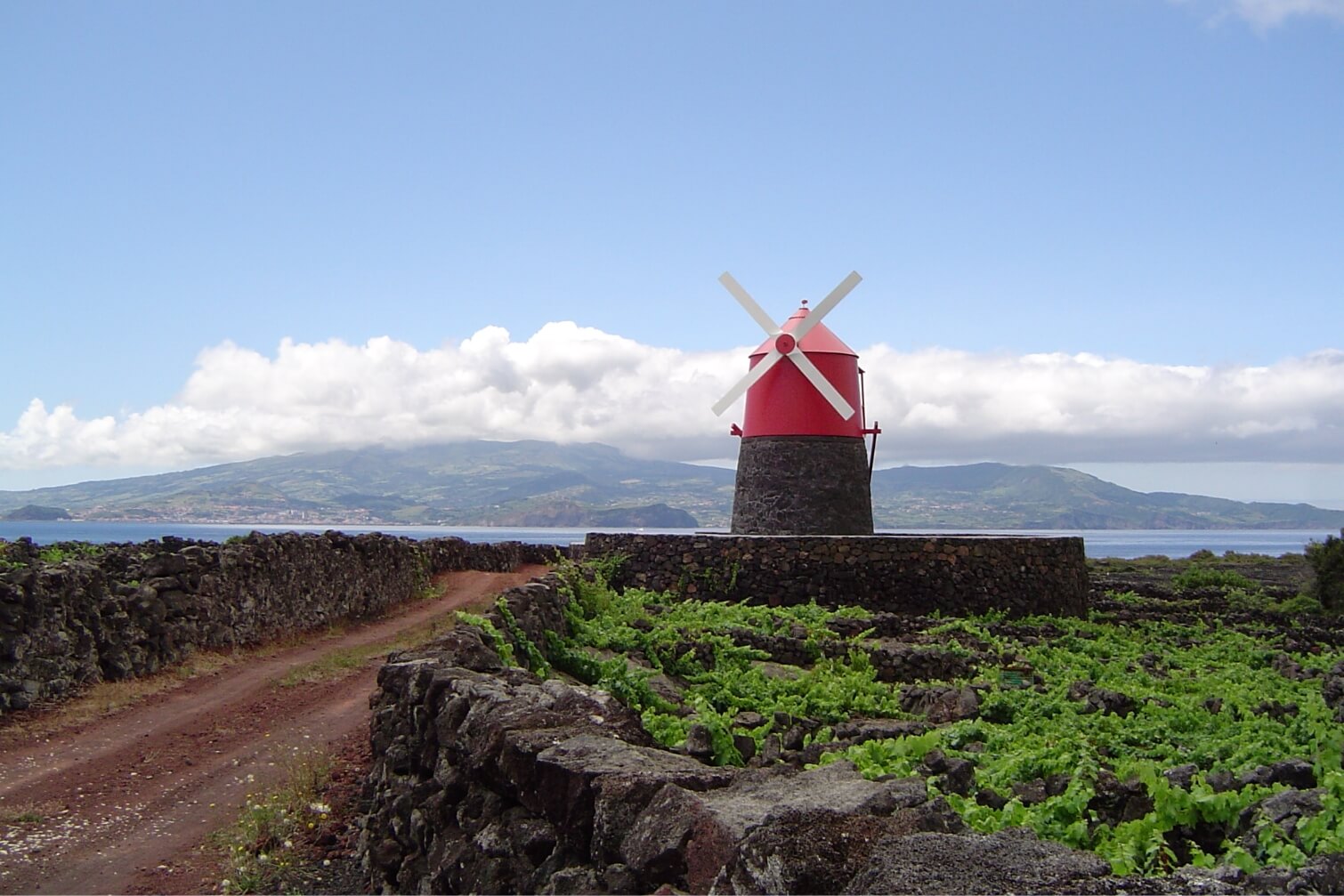

The discovery of this island by the Portuguese navigators took place at the same time of the discovery of the other islands of Central group. In the beginning, it was known as the Island of D. Dinis, and its current name comes from the fact here exist the highest Portuguese mountain. It is believed that Pico was the last island of the Central group to be populated, in an effort mainly achieved from the 1480's onwards.
Settlers from Portugal mainland, after stoping over at the islands of Terceira and Graciosa, chose Lajes as the first place of residence. The production of wheat and woad, influenced by its nearby Faial island, were a fragile basis of the economic development during the first century of settlement. Although the dry and hot climate of some parts of the island, in conjuction with the mineral resources of the lava soils that were not good to agricultural activities, allowed a success growth of the vineyard, with a predominance of verdelhograpes. Gradually, the wine and the spirits of Pico stood out among the Azorean wine production and became appreciated at inside and outside of the island, thus contributing to an increase in the development of vineyards, particularly during the 18th century. The wine was exported to Europe and America and the verdelho achieved international fame. Enough even to be present at the table of the Russian Tsars.The link to Faial is strong, not only in the administrative way but also economic.
On one hand, Horta served as export port of products from Pico, which lacked safe harbours. On the other hand, until the wine crisis of the 19th century, a large number of landowners in Pico island came from the neighbouring Faial island. The first quarter of the 18th century, the island suffered volcanic eruptions, a kind of harbinger of the end of the golden era of verdelho wine. By mid 19th century, the devasting attack of grape-mildew and phylloxera diseases extinguished most of the vineyards. Faced with their losses, with tradition and prestige disappearing in a mist of the tradition and prestige, the emigration of local people to Brazil and North America began to grow. Those who decided to stay had to live of the sea.
The island was involved in whaling since the 18th century. English and North-American fleets looked for sperm whales in the waters surrounding Pico. The ships used the quays of the island to rest the crews, acquire supplies, repair boats and recruit new sailors to fight the giants of the sea. In the second half of the 19th century, arose the first intentions of local community to embrace this activity. The whale hunting thrived and spread to the other islands of the archipelago. This activity continued until mid 20th century, when it started to decline. Its end came in 1986 with the ban on whale hunting, when the Portuguese state signed the Bern Convention. Recovering ancient traditions and reinventing them, Pico maintains close liaison with sperm whales. The contact with cetaceans, now protected, is the base of the tourism industry. Also, wine production has regained a new importance, contributing to the local economy where the services, farming, cattle-breeding and fishing are relevant activities. The uniqueness of Pico vine culture is internationally recognized, with the classification of Landscape of the Pico Island Vineyard Culture as World Heritage Site by UNESCO, in 2004.
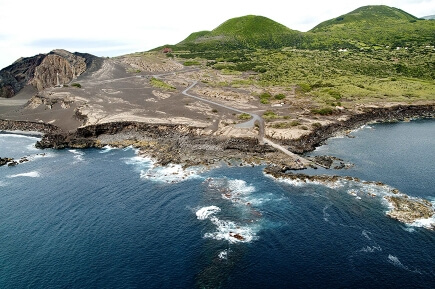
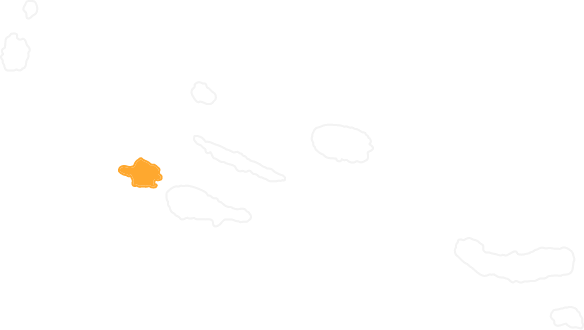
It is believed that the Portuguese discovery of this island took place after the mapping of Terceira island. Its name was inspired on the abundance of faya trees found. The first official settlers, from Flanders and Portugal mainland, must have arrived around 1465, doing a first expedition in search of tin and silver, which was not successful. Two years later, Josse Van Huertere, a Flemish noble, returned to Faial island and, attracted by the fertility of the soil, became the Portuguese donatory captain, in 1468. Under a royal decree issued by D. Afonso V, he brought new Flemish settlers to live in the valley of Vale dos Flamengos before moving to Horta.
The foreigners introduced woad on the island. The export of this dye plant and wheat represented, for two centuries, the main pillar of the Faial economy. The Spanish occupation in 1583 and the attacks of privateers, mainly French and English, created a period of dilapidation of its heritage and richness of the island. The volcanic eruption of 1672-1673 also caused a high destruction in the northwest of Faial.
The bonanza of the 17th century, after the Portuguese Restoration of the throne, came in with a shape of sheltered harbour. Horta became a navigational stopover between Europe and the American Continent, due to the conditions of its harbour and the appreciation of export of the wine produced in Pico island. Pico wine along with the wine and spirits made from the grapes of the islands of São Jorge and Graciosa were exported to Portugal mainland, Europe and the British colonies. Also, during the 18th century, the island was involved in the cycle of production and export of oranges, main source of richness of the archipelago. The harbour of Horta lived a golden era, supplying the steam boats crossing the Atlantic Ocean and the North American whaling fleets.
In mid of the 19th century, infesting diseases decimated the vineyards and the oranges groves within one decade. But given its location, the island became a centre for telecomunications. The transmition of information between North America and Europe was done via submarine telegraph cables that passed in Horta´s city, whose first station dates back to 1893. Successively, several international companies installed submarine cables linking the continents via Faial island. Furthermore, the island gained dimension in early 20th century with the opening of the Horta Weather Observatory , in 1915.
Aviation also took advantage of the privileged location of Faial, the stopover of the first sea planes crossing the North Atlantic, having the first one stopped in Horta after the end of First World War, in 1919. During the 1930's and 1940's, the important airlines of Germany, Britain, France and North America chose the island as the site for alighting their sea planes.
The use of this geographical bounty remained to this day. The Horta Marina, opened in 1986, is one of the most famous sheltered harbours of the world. With the establisment of the autonomic model of government, the city of Horta became the seat of the Regional Parliament of the Azores and followed the regional economic trend, developing the tertiary sector and leaving the others.
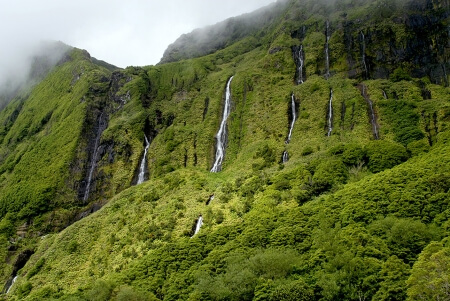
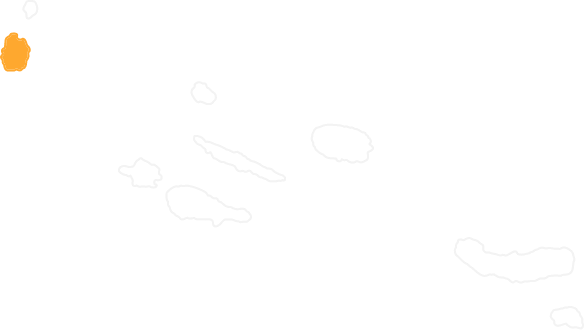
The Portuguese discovery of the islands that form the western group probably took place around 1452. It is believed that Diogo de Teive was the navigator responsible for the finding of this "far away" land. The name Flores (Flowers) seems to be linked to the abundance of natural flowers found in the island in 1470's. The settlement was not easy. Moreover, the geographical individuality of the islands of western group is mirrored on its political configuration, because, unlike its neighboring islands, Flores and Corvo are constituted as a individualized landlord that D. Afonso V delivery in 1453 to his uncle, D. Afonso, Duke of Bragança and Count of Barcelos.
Also, the first efforts to settle the island had Flemish origin with Willem van der Haghen, who had initially settled on the island of São Jorge and then decided to try the settlement on a land located further west, sometime in 1480. Whether he was disappointed with the economic potential of the island or with the isolation from the rest of the archipelago, the truth is that the experience failed and the Flemish returned to São Jorge. The Flores island was abandoned for many years, the territory had to wait until 1508 for a successful settlement, thanks to the efforts of the Fonseca family captains. Although the late settlement, the demographic growth was consolidated. Lajes das Flores was granted a town charter in 1515, with Santa Cruz das Flores obtaining it in 1548. From the late 16th century, the hand of Mascarenhas projected further the demographic development of this island.
In a similar way of the rest of the archipelago, cereal cultivation represented the economic support for a couple of centuries, also supported by raising sheep, production of cloth and fishing.
Throughout the 16th and 17th centuries, the quiet and isolated island suffered frequent unwanted visits of privateers. Flores island is the westernmost point of Europe, so taking advantage of a position of great tactical importance, worked as a strategic point for the Crown supporting logistically ships from the Pacific and Indian Oceans. As a result, it was the target of a constant vigilance on the part of privateers and pirates who quietly waited the passing of the Spanish galleons filled with precious metals from the Americas and the Portuguese ships coming from the East.
The 19th century writing of Lord Alfred Tennyson was perpetuated on the poem The Revenge these distant time of sea adventures and pillages. “At Flores in the Azores Sir Richard Grenville lay” begins the description of the heroic defeat of the ship captained by Sir Richard Grenville at the hands of a Spanish fleet. By the mid 18th century, Flores became a safe harbour for the English and North-American whaling fleets, searching for supplies and sailors. This external influence required the construction of bases to hunt sperm whales at Lajes das Flores and Santa Cruz das Flores. There are still vestiges of buildings for the extration of oil from whales.
The airport opening in 1972 and the construction of modern ports led to a greater integration of the Western Group in the Azores Archipelago. The tertiary sector supports the economy of the island, occupying 60% of manpower, where the tourism is assuming an increasing importance.
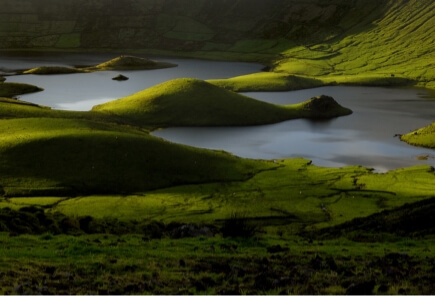

The sighting of the Corvo island by the portuguese navigator Diogo de Teive might have occurred in 1452, at the same time as Flores discovery. Given its small size, this island did not attract the attention of azorean settlers. The natural state almost pure was broken in mid 16th century, when the donatory-captain Gonçalo de Sousa sent a group of slaves to Corvo, probably from Cape Verde, to farm the land and breed cattle. In approximately 1580, some settlers of Flores went to Corvo increasing in this way the local population.
Life in Corvo ran slowly, guided by the rhythms of agriculture, fishery and cattle, as a way to ensure the subsistence of the inhabitants. On the contrary of what was thought, the geographic location allowed it to overcome its expected isolation. In fact, Corvo defined the border line which brought the Portuguese Army that received ships coming from various parts of the Portuguese Empire and Spanish and, thereafter, accompanied them safely to Europe. For this reason, the isolation was broken at the end of the 16th century and throughout the 17th century by the frequent arrival of privateers and pirates searching for pillage and hostages. In Corvo, they found a strong resistance, being historical the defeat of the pirates from Barbary, North Africa, in 1632. In this episode, the inhabitants threw stones to repel the invasion. According to legend, in this hard and unequal battle, the local population was helped by Our Lady of the Rosary, who "deflected the bullet fired by the pirates and returned them, in multiple figures, back to ships of the Moors, thus dispersing them". Since then, this saint became known as Our Lady of Miracles.
In 1832, the bravery of the inhabitants of Corvo became evident once again when a group of local population went to Terceira island to ask for the relief of the heavy tax that had to be paid to the donatory captain of the island and to the Court. The minister of the D. Pedro V, Mouzinho da Silveira, who was at the time organising the reconquest of the Portuguese Throne from Angra, was shocked by the slavery manner in which the local population had to live. Thus, he proposed the cancellation of the part of the tax that had to be paid in cash and reduction of fifty per cent of the payment of wheat. On the same year, the locality was promoted town and municipality, changed its name to Vila do Corvo.
The 18th and 19th centuries brought American whalers to the coasts of the islands of the Western Group. Some locals were recruited to hunt sperm whales and earned reputation as courageous harpooners. In 1864, Corvo had almost 1,100 inhabitants but the populational decreasing was, since then, bigger. Between 1900 and 1980, Corvo island went from 808 to 370 inhabitants, this decrease was caused mainly by emigration to the United States and Canada.
The opening of the airport of Corvo, in 1983, was crucial to the modernization of the island. In 1991, the establishment of regular flights from the islands of Flores, Faial and Terceira contributed to the full integration of the island in the economy of the Archipelago. The cattle breeding is the main economic activity of the island.
Keeping intact its identity and a strong bond to the nature and the Azorean culture, the handicraft from the Azores has innovated.
The certification mark “Artesanato dos Açores” (“Crafts of the Azores”) includes
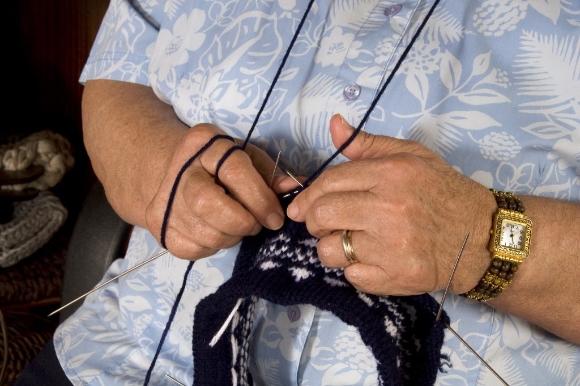

Salientam-se as Rendas Típicas do Pico e Faial.
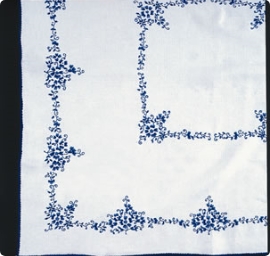
distinguem-se em vários tipos: o “Bordado de São Miguel”, o “Bordado da Terceira” e “Bordado a Palha de Trigo” do Faial.
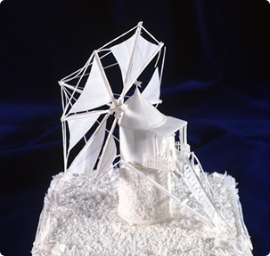
Inclui peças tridimensionais com motivos florais ou figurativos da cultura açoriana.
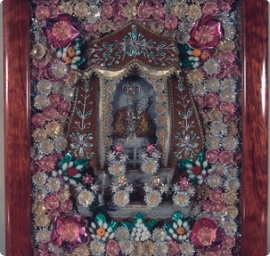
Exclusivos da ilha de São Miguel, são pequenos altares construídos sobre uma estampa do Senhor Santo Cristo e adornados com flores.
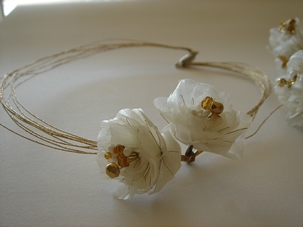
constituem uma modalidade da arte conventual, e geralmente, caracterizam-se por motivos florais.
Regional gastronomy is mainly based on the freshness of products taken from the sea and harvested from the land. As for sweets, much of it comes from old convent recipes.
Because of the tradition in cow milk production in the Azores, in almost all the islands there are various dairy products, being more famous the numerous Azorean cheeses.
There is also a tradition of producing different wines, “aguardentes”, liqueurs and appetizers.
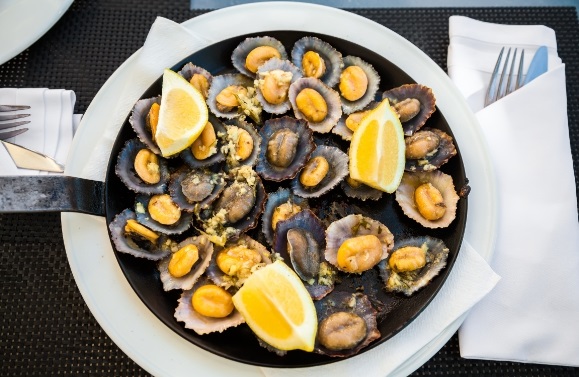
Fish such as tuna, blue jack mackerel, chub mackerel, forkbear, red porgy, and swordfish are commonly served. Freshness reigns on grills, stews, roasts or in fish broths. There are lobsters, mediterranean slipper lobsters, crabs, spider-crabs and barnacles. Limpets are served grilled, with Molho Afonso sauce or are cooked in rice or mashed bread. The island of São Jorge is the only island that offers clams.
The Azorean beef benefits from a protected geographical indication, with some dishes being prepared from it, such as the Alcatra (rump) from Terceira island, boiled beef, and regionally-flavoured steaks. Liver sauce cracklings and sausages are must haves, whilst linguiça can be the main course if served with taro root, and blood pudding an appetiser if complemented by pineapple.
The cheese Queijo de São Jorge is at the top of the list of tasty dairy products, with skilled hands and ripening time being the secret for a myriad of tastes and textures. Everything starts with fresh cheese that is served with pimenta da terra (red pepper mash). When cheese is served for dessert, it can be complemented by bananas or husk tomato jam (the husk tomato is known for its exotic and perfumed flavour).
In addition to bananas and apples, the Azorean climate favours exotic fruit such as the strawberry guava and the cherimoya. The pineapples and passion fruit of São Miguel have earned the right to wear the seal of denomination of protected origin.
Pastries whose origins can be traced back to convents stand out among the cakes and sweets that are typical of each island and are a pleasant surprise given their names and flavours.
Wine is produced on the islands of Pico, Graciosa and Terceira, but now from different grapes and complementing the once famous verdelho wine. Beer, soft drinks, fortified wine, fruit liqueur, and brandy complete a diversified offer. Tea is planted on the island of São Miguel, adding another exotic taste to the pleasures of the Azorean cuisine.
Cozido das Furnas, made with various meats and vegetables, is cooked by the geothermal heat in a pot that is placed under the ground. Some delicacies are common during the Holy Ghost Festivals, such as the Sopa do Espírito Santo (Soup of the Holy Ghost) and the Massa Sovada (Portuguese sweet bread). The bread known as bolos lêvedos, typical from Furnas, is served at any time throughout the whole year.
In the Azores archipelago there are manifestations of faith and religious devotion closely related to the occurrence of catastrophic natural phenomena, especially the volcanic and seismic events that often affect these islands.
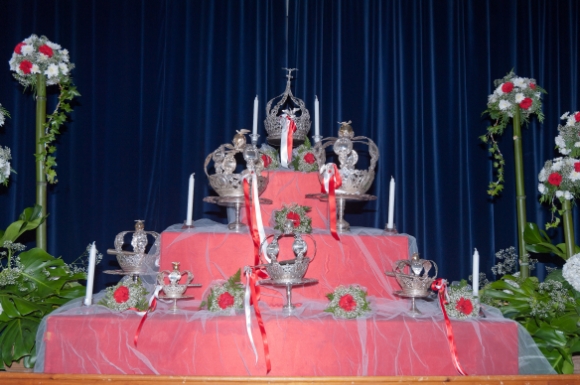
The Holy Spirit Festivities in the Azores dates back to early settlement and constitute a genuine demonstration of popular culture of the Azorean people, where the profane is often mixed with the sacred and the mundane pleasures of the good gastronomy cohabitates with promises made to the Divine.
The “Procissão dos Abalos”, on Terceira island, is held every year on May 31st, in evocation of the intense seismic activity that occurred on the night of June 1st to June 2nd, 1867, premonitory of the submarine eruption offshore “Ponta do Raminho”, the place overlooking the sea where is celebrated an outdoor Mass and Sermon
The “Romeiros da Ilha de São Miguel” are a group of men who travel on foot across the whole São Miguel island by the time of Lenten, in prayer and penance, a tradition dating back to the 16th century when the island was shaken by a violent earthquake that decimate the population and caused severe damages.
The “Império dos Nobres”, on Faial island evokes the 1672 eruption of the Cabeço do Fogo volcano, associated to the perpetual vow that orders to celebrate a solemn ceremony on the day of Pentecost.